
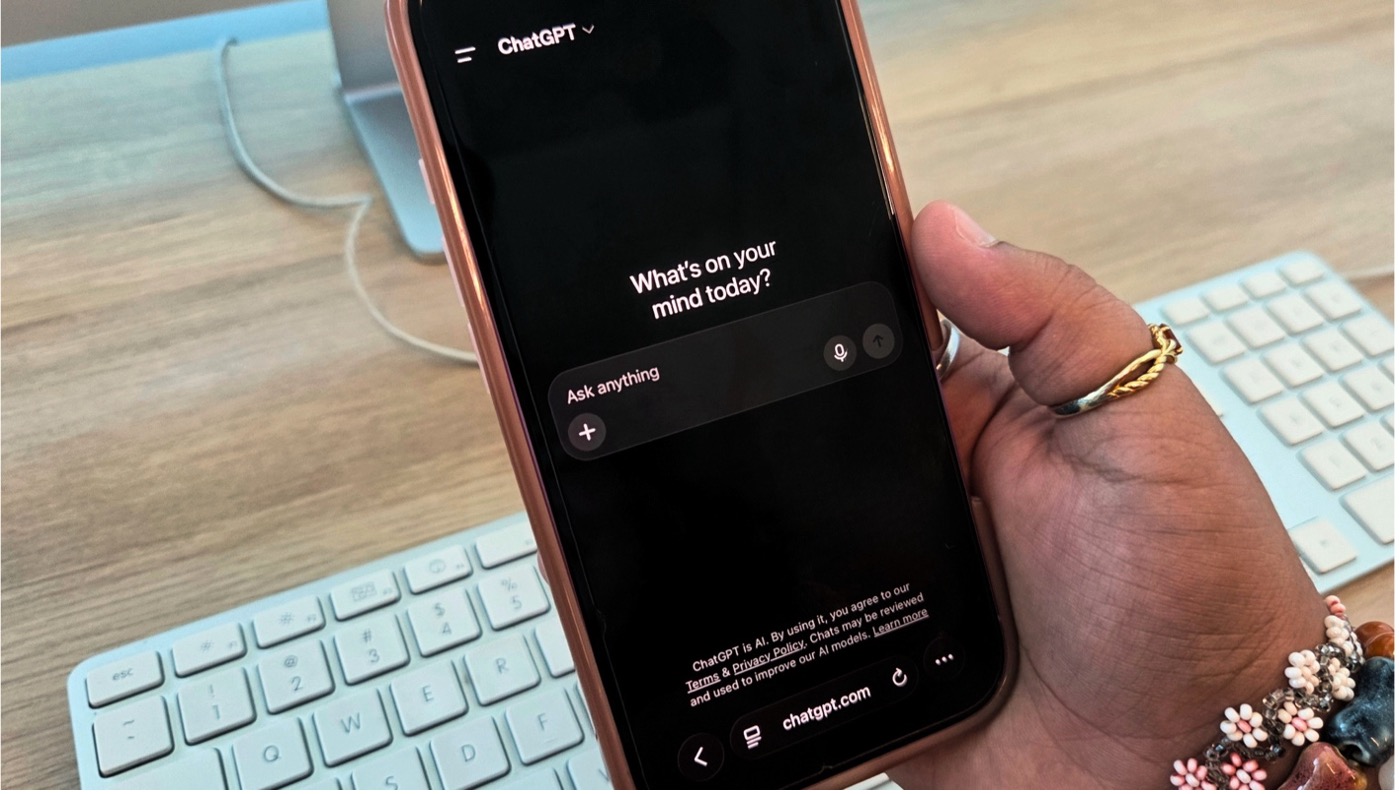
AI is all around us.
It’s integrated into our everyday lives, and we see it everywhere we go, especially on a college campus. It seems almost impossible nowadays to get through an entire week’s worth of classes without hearing a professor talk about, or even mention the term, artificial intelligence.
For junior Viviana Velazquez, AI isn’t a daily necessity but is instead used as a starting point when inspiration isn’t quite there. “I usually don’t use AI,” Velazquez admitted. “But I do use it sometimes when I’m starting to plan an essay and I absolutely have nowhere to start.”
Velazquez isn’t alone in determining when and how to use AI in her schoolwork, with several students not knowing when it’s considered cheating. Yet, despite how frequently those two letters are thrown around by professors, its actual meaning often gets lost in all the noise.
We all know of AI, but do we really know what it is and how it’s being used?
Dr. Lucretia Fraga, a professor of teacher education at the University of the Incarnate Word who specializes in researching the use of artificial intelligence in education, defines AI as a tool that can “analyze patterns, generate content, and support learning.” Additionally, she points out that it still requires “human judgment and critical thinking to determine whether what it produces is accurate, unbiased, ethical, and appropriate for the context.”
She notes, “One of the biggest misconceptions is that Gen AI ‘thinks’ or is ‘smart’ in the same way people are.”
While many feel they must view AI as either a positive or negative thing, why not see it simply for what it is: a tool. Like any other technology, its effects depend entirely on how we choose to use or misuse it.
As artificial intelligence continues to transform the way we deal with our everyday tasks, the most noticeable shift in the classroom isn’t about the technology, but more so the psychological effect it can have on students. For those pursuing specialized fields such as graphic design, the rapid rise of AI has students reconsidering what their future careers might look like.
“As with most new things, it’s a fear of the unknown,” explains Michael Clayton, Professor and Department Chair of the Graphic Design program at the University of the Incarnate Word. “The common knee-jerk reaction is that AI will take all of our jobs, which really it won’t. It will modify what we do, it’ll enhance what we do.”

Rather than erasing hard work and replacing human creativity and critical thinking, it presents an opportunity for students of all fields to better understand and learn how to work alongside AI.
When thinking about the future of artificial intelligence on a college campus, Fraga stated, “I think Gen AI has the potential to become increasingly integrated in meaningful ways into teaching, learning, research, and the everyday work of a college campus.”
AI won’t define the future, but how you choose to use it will. At the end of the day, AI is only as powerful as the person behind the screen allows it to be.
So the only question is, will you let it think for you, or will you use it to elevate what you can do?
